
Last week marked the 80th anniversary of the end of World War II. Now, many (if not most people) hear World War II automatically think of the Atlantic campaign. This is because of the atrocities that were committed by the Nazi party. However, the United States formally entered WWII in response to the japanese attack at Pearl Harbor. That being said, the biggest grit the United States had in the war was actually in the Pacific campaigns. For the United States, the war began and ended with Japan. And it is for this reason that this week’s review is on Guadalcanal Diary and The Thin Red Line.
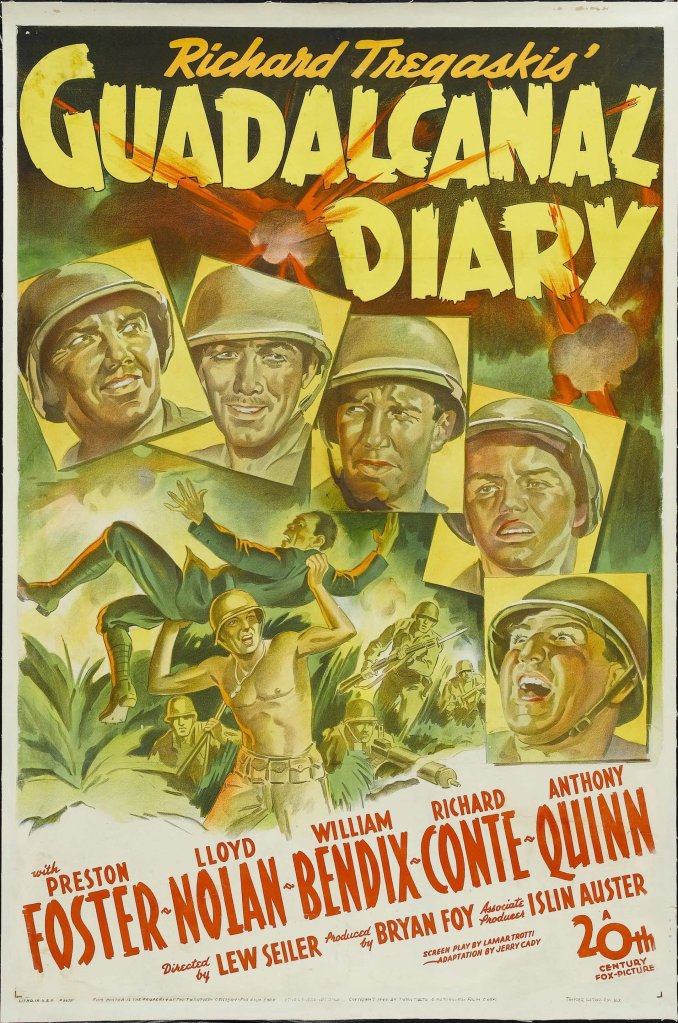

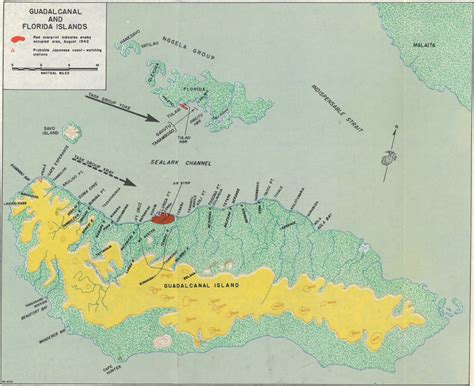
Both films are about the Battle of Guadalcanal, aka Operation Watchtower. Which served as one of the biggest turning points in the Pacific war. The victory caused a shift in japanese strategy from offensive to more defensive. Although Midway is considered the true major turning point in the Pacific campaigns, Guadalcanal was a significant factor because it prevented airspace control of the japanese forces thus allowing for more offensive campaigns thereafter on behalf of the US and allied forces.
Guadalcanal Diary was made one year after the actual Guadalcanal battle. The battle took place starting in 1942 and went into 1943. The film depicts the initial invasion of the Guadalcanal island by the United States Marine corps. It is told from a perspective of a war correspondent embedded with the troops. It has a very similar approach as the Nineties Sci-Fi film Starship Troopers. Anthony Quinn plays a central character named Private Alvarez. The film kind of follows the events mainly around his character. The best way to describe Guadalcanal Diary is a typical 1940s “Rah-rah rally round the brave troops”, “They’re beating the Japanese”, “Remember Pearl Harbor”, etc type of film. (COMMENT: It serves like a moving Recruitment poster for the US Marine Corps.)
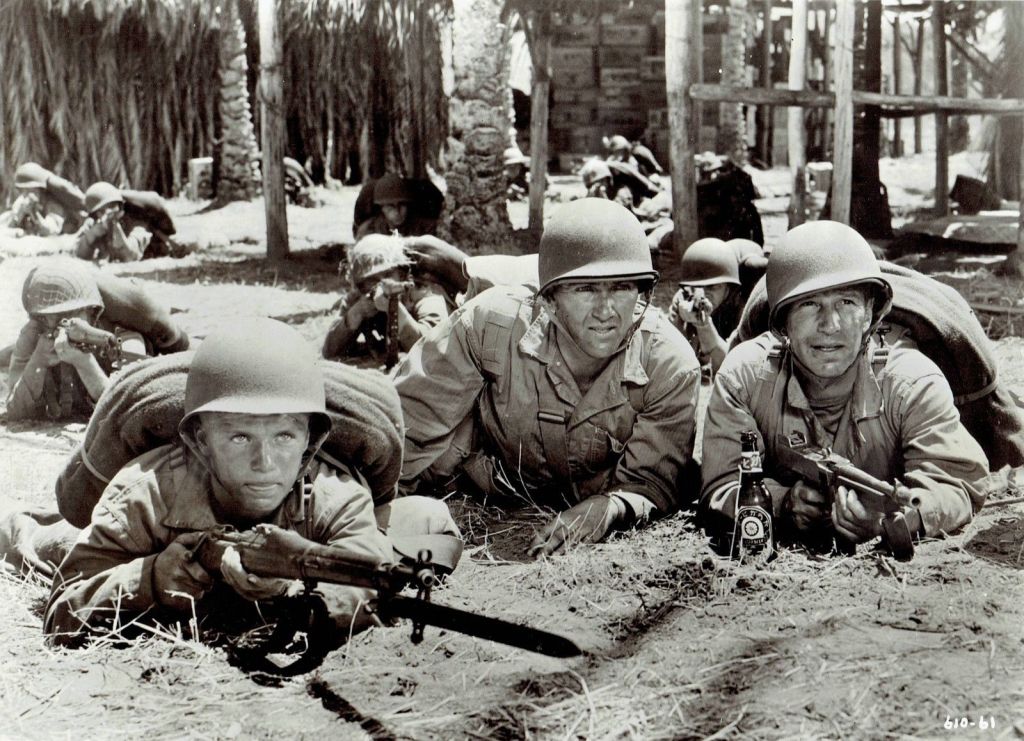
Despite feeling like I was in a movie theater during WWII watching a news reel, it had a pretty good script. Depicted camaraderie, personal confliction, different types of leaders different approaches and strategy, etc, and it didn’t feel simplified. It didn’t feel overly rehearsed. It all felt natural. But most of all, not a single conversation felt like a forced, cowboyed up John Wayne war film. (COMMENT: Nothing against John Wayne. I actually thoroughly enjoy many of his films. Including. His war films…you know the ones when he basically walks on screen, and the fighting just stops. Oh wait….that was Superman. No, wait…wasn’t that Above the Law?)
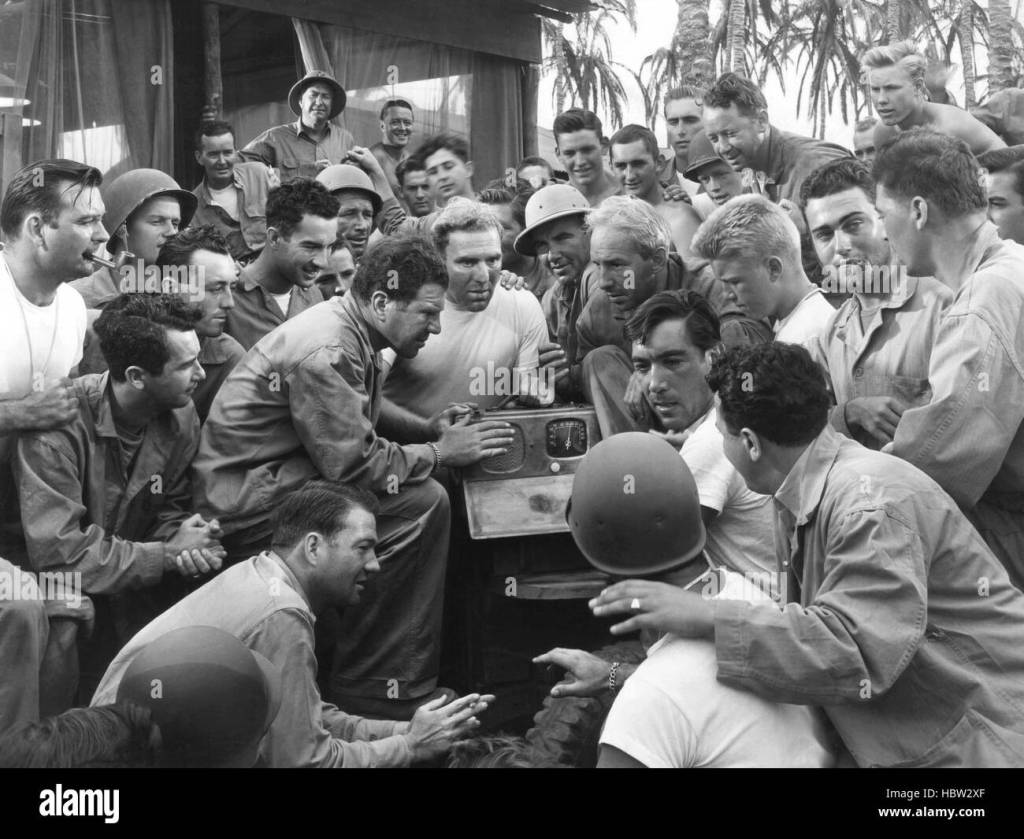
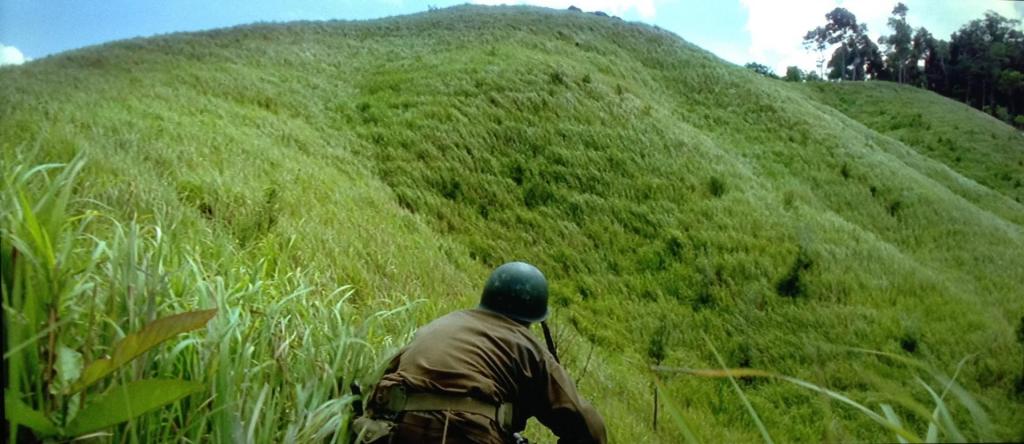
The film focused a lot on the difference in style of warfare between japanese forces on the island and the US tactics. The Japanese were kind of the first ones to introduce the style of guerrilla warfare to the US and allied forces. (COMMENT: Wait…we don’t learn about guerilla warfare until Korean and Vietnam wars in history class.) I don’t mean true guerrilla warfare where they’re dressed as civilians and they’re posing as a family or anything like that. I mean utilizing the terrain and the natural resources around them to their advantage. A primary example is hiding high up in the trees, high up in mountains and hills. Blending in with the grass by putting leaves and grass blades on their helmets. Meanwhile there’s US forces coming in kinda linearly, stepping very closely to each with each other, going very slowly, sweeping every patch of grass that they come across.
All in all, the film was fun to watch, and I definitely recommend it to any of those in particular that are interested in seeing a war film from the time of the war.
Moving on to Terence Malick’s The Thin Red Line, which was made about 55 years after Guadalcanal Diary, and therefore came out during the time of when war movies were darker. They focused on the atrocities of war. The idea that war itself is an atrocity. The Thin Red Line came out about ten to 15 years after Stanley Kubrick’s Full Metal Jacket and Oliver Stone’s Vietnam trilogy. But, unlike those films, The Thin Red Line didn’t focus on the atrocities that go on in the war. Instead, it depicted a more humanized version of the events of Guadalcanal.
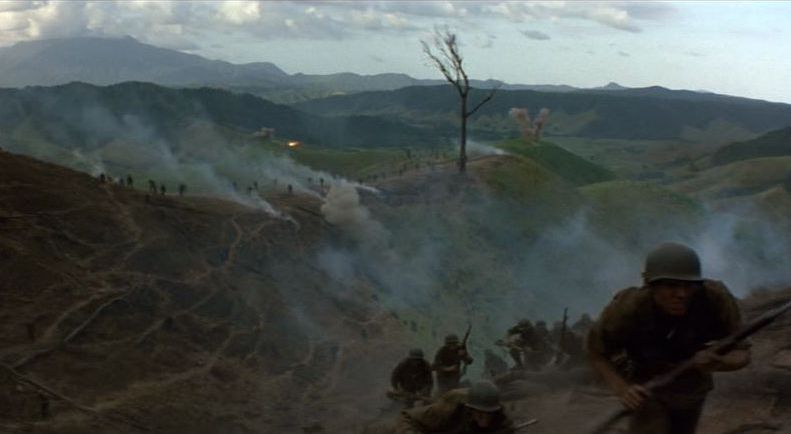
The film actually takes place during the second part of the Guadalcanal campaign. The United States Marine Corps went in first to clear as much of the island as possible and secure airfields under construction by the Japanese forces. The United States Army came in second to relieve the Marines, and continue the campaign by gaining more inland ground. In both parts of the battle, the objectives were to control airfields and airspace. Clear out the small island of japanese forces so that way allied forces could base there.
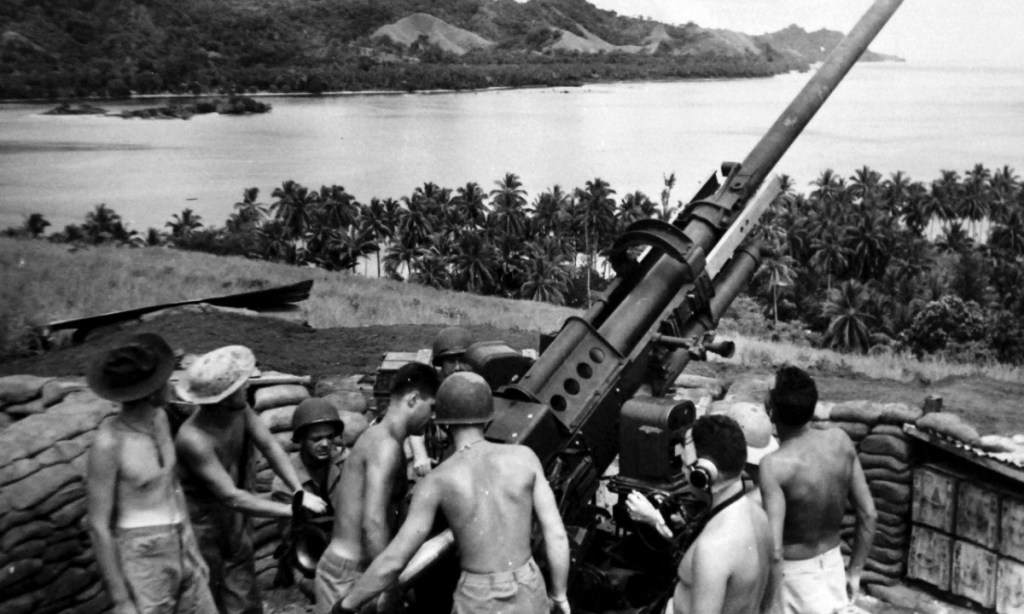
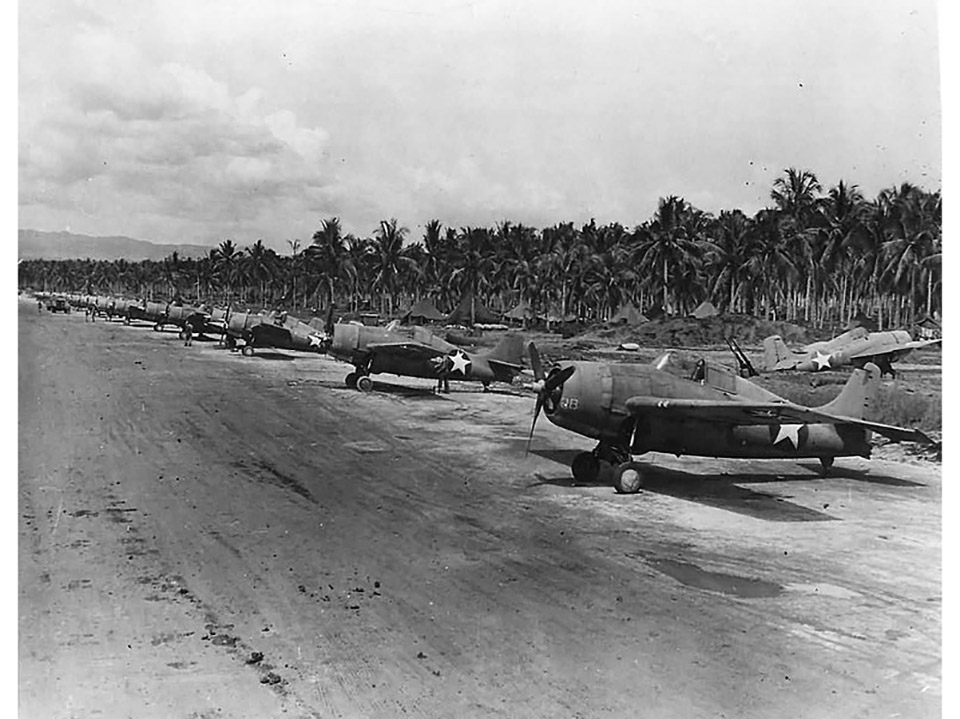

The Thin Red Line is a stark contrast from Guadalcanal Diary, as I mentioned before. While Guadalcanal Diary almost felt like a walking, moving recruitment poster, The Thin red line kind of depicted the greatest generation for what it truly was. Men and women who were witnessing the world tear itself apart piece by piece. (COMMENT: Let’s face reality folks, we as a country have been known to put the “Greatest generation” on a pedestal. And Tom Brokaw didn’t do any favors with his book of that same title) I’m not denying that they truly did great things. They moved heaven and earth, and they banded together to get it done. However, they didn’t have a choice. In a situation like World War II, the world really was tearing itself apart. And that generation had to choose which side they were on. Terence Malick gave us that exact representation. When I say that The Thin Red Line thrives on the humanity, I mean it. True, it does focus on the United States perspective. But it does not villainize the Japanese forces, because the Japanese forces were following orders, just like the United States forces were.

The Thin Red Line does have a reputation of focusing too much on philosophical themes than most war movies. In fact, if you ask somebody if they’d seen it, a lot of times they’ll probably say they haven’t or they’ll say, “oh, God, I hate that movie. It’s all about philosophy.” (COMMENT: Fun fact, those same peeps will cite Platoon, Black Hawk Down, and Apocalypse Now as some of their favorite war movies! Ironic or Hypocritic? I’ll let you judge.) The Thin Red Line was literally about the men trying to complete their objective and maintain what was left of their humanity in the process. The characters often swap in voice overs. As though you’re hearing what’s going through their minds. Some of the characters quote poetry. Others are simply voicing their letters home. But each man is saying something very similar. That the world was tearing itself apart and they were just there to try to stop it. As I mentioned in a previous post, I personally spent some time in a “warzone”. I can tell you from experience….this was the most accurate depiction of being “over there” is like. There’s all kinds of personalities, hobbies, and opinions.

Which bring me to the characters themselves. This particular film captured so many different personalities in one unit. Every character was unique. Every character served a purpose. Sean Penn played the voice of reason First Sergeant. (COMMENT: Come on folks! I just gave you a major selling point here. Sean Penn as the voice of reason!!!!) Jim Caviezel plays the central character, the private who is trying to find the remaining beauty in the world. Nick Nolte gives a fantastic performance as that quintessential Lieutenant Colonel that dreams of being a great militaristic mind of his time in the footsteps of Caesar and Napoleon. Meanwhile the very underrated Ben Chaplin, of course, gives a wonderful performance as a man who just dreams of getting through every day so he can return home to his wife. There are other A-list actors such as George Clooney as one of the commanding officers of the company. Woody Harrelson as another sergeant. And many others.

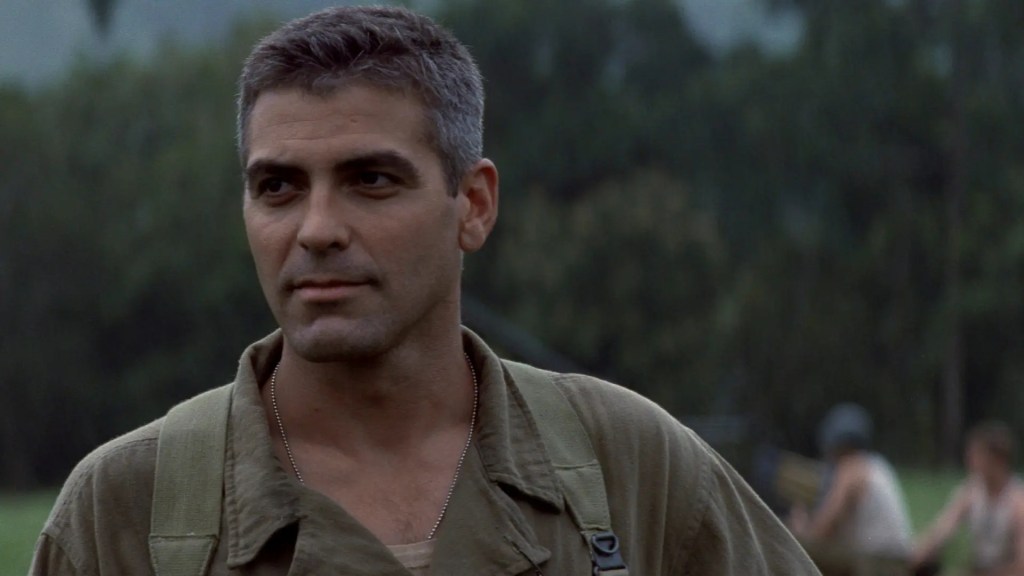
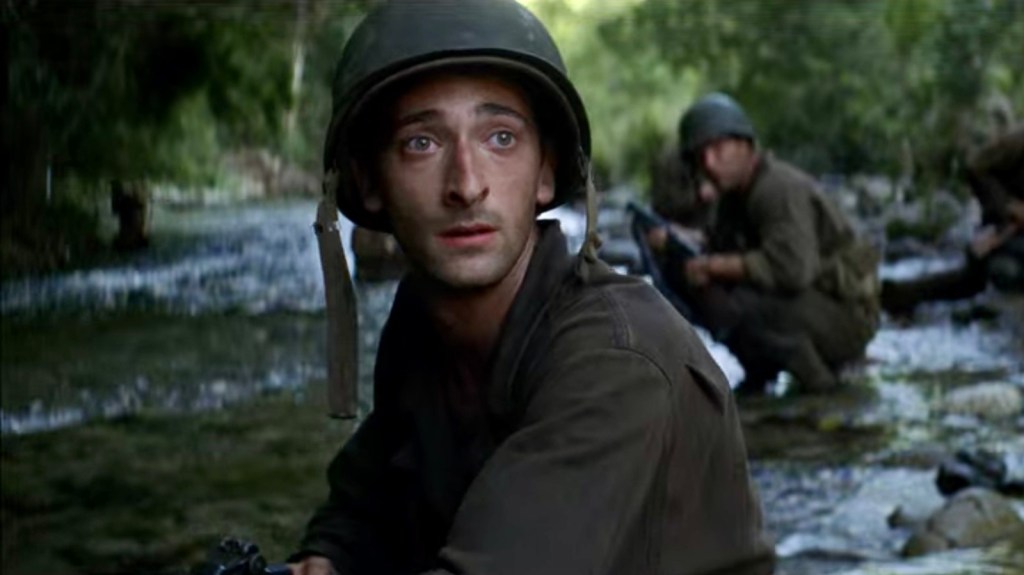
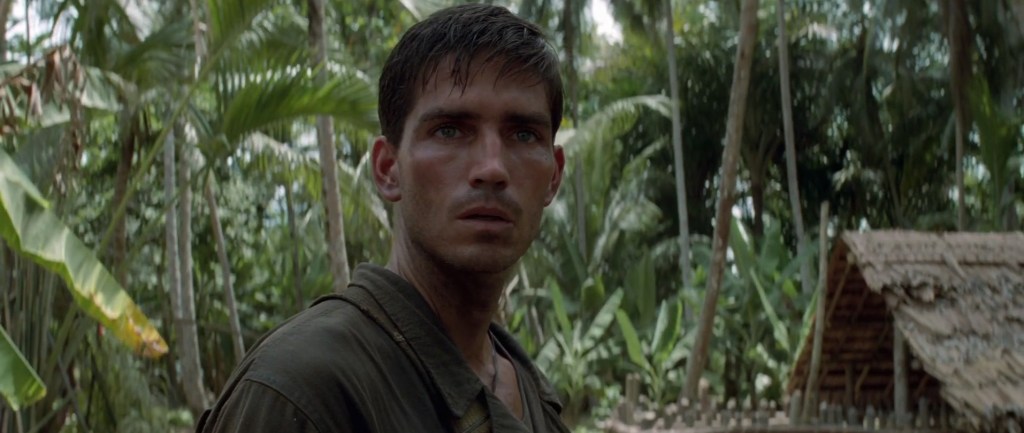
As this film was directed by Terence Malick, stunning visuals are definitely provided. Not only of the battle scenes, but also of the natural beauty in the terrain and the landscape. Up close filming and interaction with the human natives as well as the animals native to the region. To accompany such visuals, the great maestro himself, Hans Zimmer did the score. And it’s incredibly unique.

With that, I invite you to enjoy both films. For what they are. And. As always. Comment and let me know what you think.
 Positively Unapologetic Film Reviews
Leave a comment