
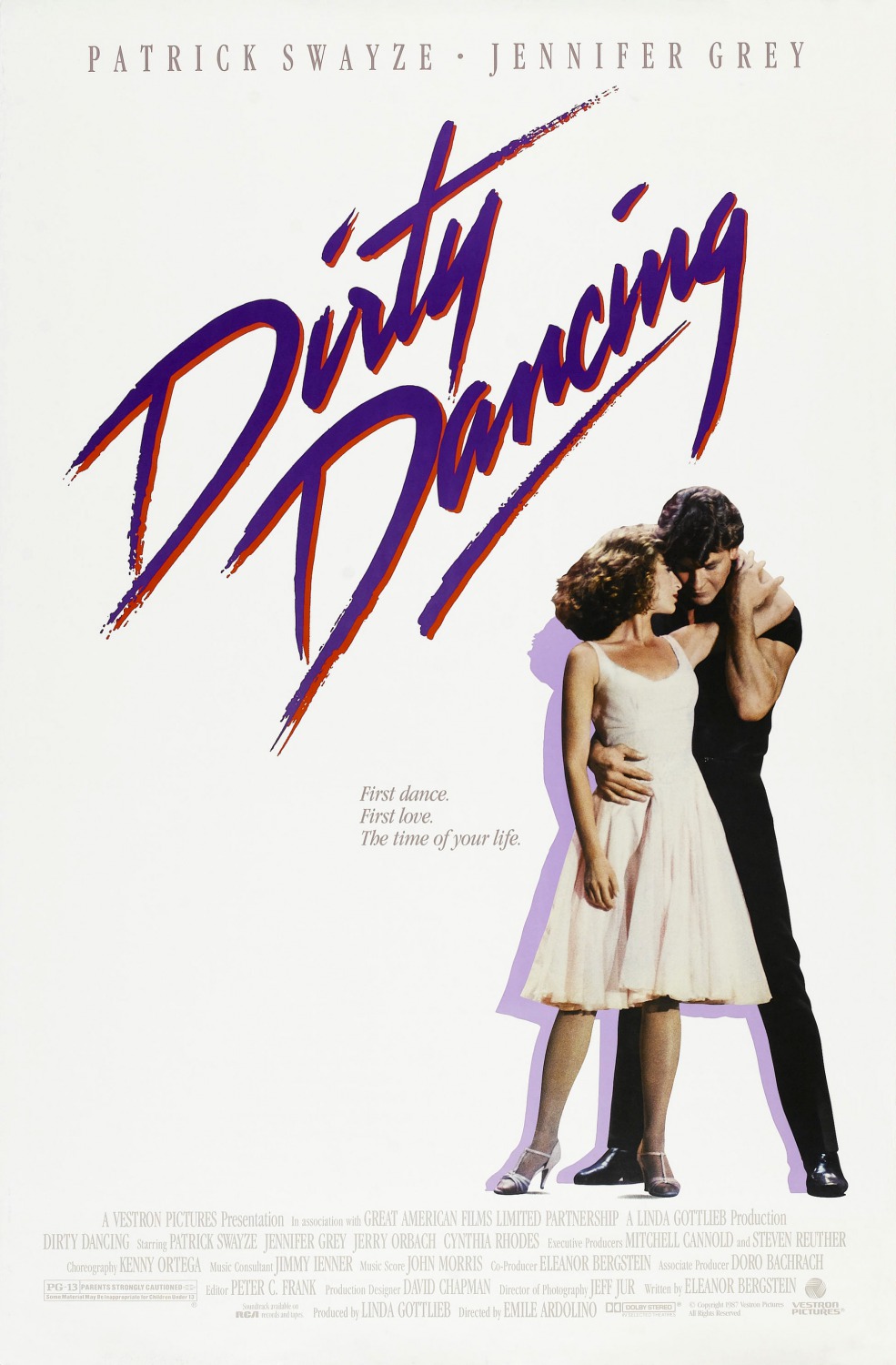
Mission: Impossible – The Final Reckoning. Ballerina. The Phoenician Scheme. Wolf Man. How to Train Your Dragon. Mickey 17. Black Bag. A Minecraft Movie. 2025 is half over, and has already seen an eclectic collection of cinematic releases. We have all mourned the loss of legendary actors including Val Kilmer, Gene Hackman, and Michael Madsen. We are on our 3rd Pope in 20 years, and conflicts have broken out between multiple nations. Obviously it was a tough decision on what the subject of the inaugural post should be. So, what could I do? Naturally, I couldn’t resist a dare. The first post is my unapologetic stance on the 1987 musical Dirty Dancing.
Now, I will be the first to admit that I have probably voiced negative feelings toward this film throughout most of my life, mainly because my mother loved it a little too much. She would watch most times if it were on TV, and I bought her the VHS for her birthday one year in the hopes that maybe she would get tired of it. The theory was sound…for a 14 year old boy that thought Mission: Impossible 2 was a work of art. [COMMENT: No, I had not taken up drinking until college.] While this attempt was “unsuccessful”, I did develop an appreciation (if not mere tolerance) for the film. The more I was subjected to the comedic montages, catchy soundtrack, impressive choreography, and well-written script, it became apparent it truly does have something for everybody.
Dirty Dancing stars Jennifer Gray, Patrick Swayze, Jerry Orbach, and a few notable others. Released in 1987, the story takes place in 1963, approximately four months before JFK was assassinated. The story is of a forbidden love between a teenage girl (Gray) visiting a resort with her family and the resort’s dance instructor (Swayze). The two start off with a mutual dislike for each other and begin dancing as partners through necessity, but fall for one another in the process. Side stories revolve around Gray’s character and her relationship with her father (Orbach), which is strained by events portrayed in the film. The costume designs, props, and set designs do a good job portraying 1960s east coast culture. However, the most notable detail about the story is the depiction of the social criticisms in the 60s, as the central storyline revolves around Gray and Swayze’s characters’ relationship, and the catalyst for the main plot involves a supporting character facing an unplanned pregnancy.
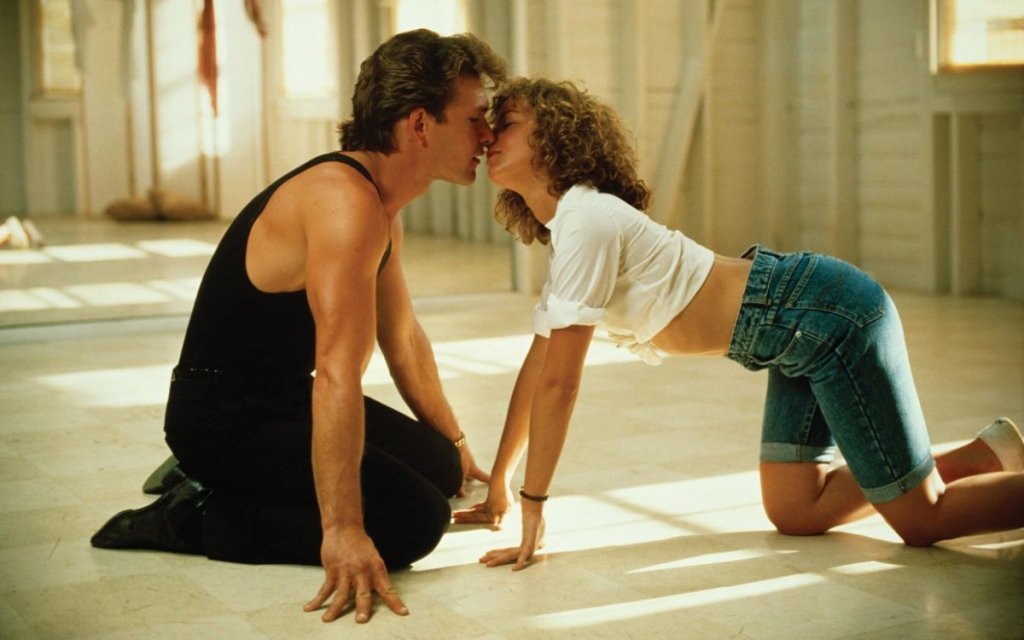
Yes, it is considered a chick-flick. In fact, it has been frequently referred to as THE chick-flick, outranking “Casablanca” as Dirty Dancing doesn’t feature any Nazis. However, if I have to be brutally honest, Dirty Dancing is more than a love story. It’s a unique musical in the idea that it does not revolve around the lyrics of songs, nor does it revolve around the mere rhythm. Instead, the film serves as a love letter to the feel of music and expression through dance. Having spent nearly a decade in chorus, I can definitely appreciate any love for music. The characters don’t simply have conversation then spring into steps in the vain of Danny Kaye and Vera-Ellen. Nor do they hold conversations through song as we all have seen in films such as The Greatest Showman. Because the story revolves around a dance instructor and his “student”, every song and dance serves as a part of the storytelling. The dance numbers take place during performances by the characters, and the songs are what they are dancing to. Which brings me to the soundtrack.
The soundtrack includes many interesting songs from the late 1950s and early 1960s. These tracks really only serve the purpose of reminding the audience when the story takes place. While there are multiple dance scenes that utilize these tracks, the most iconic ones utilize songs written for the film. [COMMENT: No, they didn’t even bother to attempt to mask the very 80s use of synthesizers and fake drum beats.] This can serve as a total mindf— for the viewer because all of the sudden it looks as though the dance instructor has Hungry Eyes by Eric Carmen playing on the turntable. Or in the case of the most iconic scene where Swayze’s character plays the track “(I’ve had) The Time of My Life” for the final dance number. [COMMENT: Holy crap! I didn’t know time-travel was in this picture!] While admit that I sometimes find myself looking for a time traveling DeLorean to explain the shift in music, the shifts actually help keep the attention of the audience. The songs written for the film also serve as key storytelling points. The best example would be the use of the track “Hungry Eyes” used for the “training montage” where the two characters develop their mutual attraction. Another use of the 80s music would be the final scene of the film, where “(I’ve had) The Time of My Life” serves as the conclusion and the final goodbye among the characters.
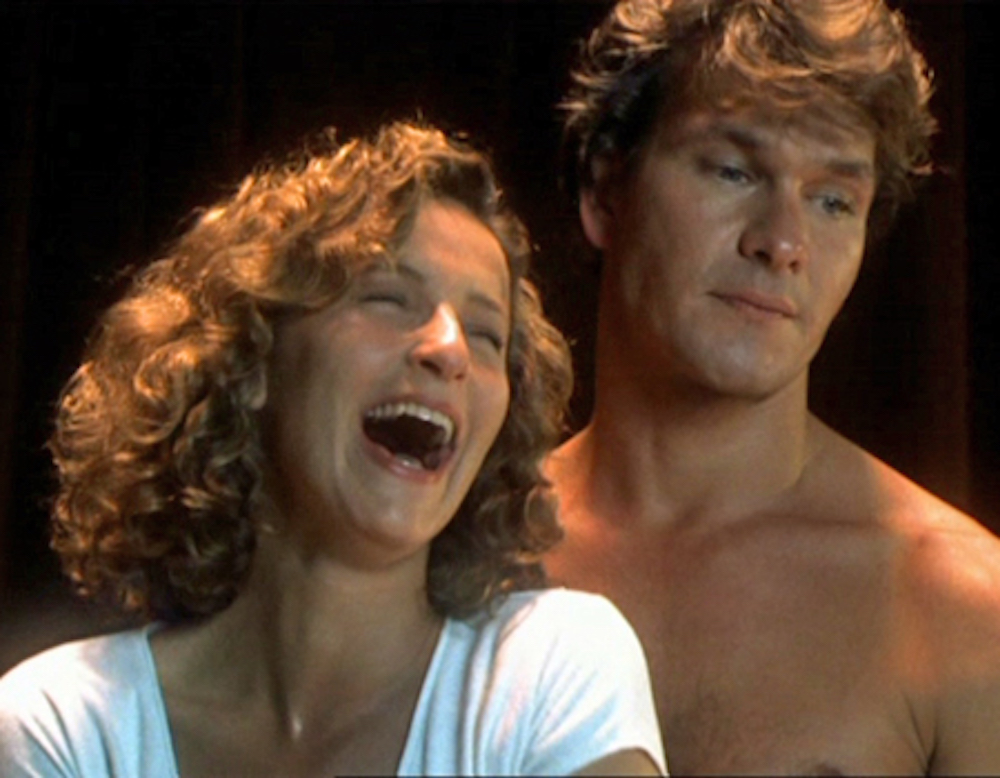
I highlighted a comedic aspect to this film earlier. Most of the comedy comes from (believe it or not) Jennifer Gray’s naïve tendencies throughout the film. She trips over her words, and often trips over her own feet while her character learns to dance. [COMMENT: No iconic noses were broken during the filming of this picture.] Patrick Swayze also does a great job in his reactions in these scenes. He even throws a fun one-liner here and there which brings a chuckle or light giggle from the audience.
Although I probably will not personally go out of my way to marathon the film, Dirty Dancing has something for everyone to enjoy. There’s romance, comedy, social commentary, and an iconic soundtrack. Guys, do yourself a favor. When your date wants to watch Dirty Dancing, don’t roll your eyes. Give the d— thing a shot. You might actually find yourself a guilty pleasure. Whether or not you admit it to others, is entirely up to you!
If anything take this lesson from the movie….

 Positively Unapologetic Film Reviews
Leave a reply to revchris71 Cancel reply